
Impact of GST Notices – New Updates in January 2026
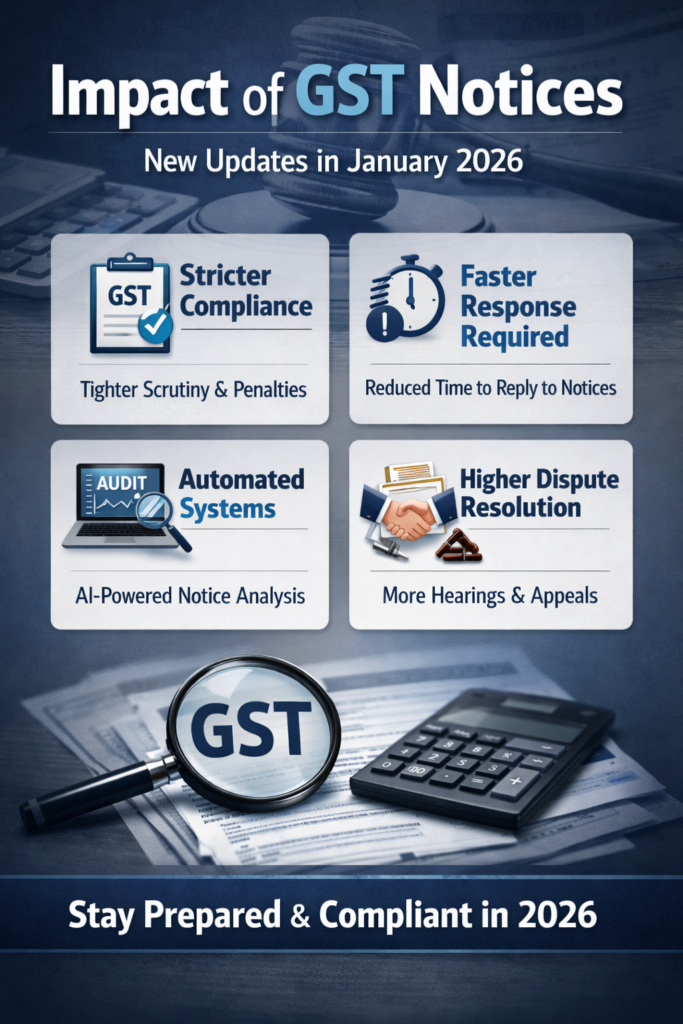
With the GST system becoming more technology-driven and data-oriented, January 2026 has brought noticeable changes in how GST notices are issued and handled. These updates have a direct impact on businesses, especially small and medium enterprises. What’s New in GST Notices (January 2026) Increase in System-Generated Notices GST notices are now largely auto-generated based on […]
Exempted Sales and E-Way Bill – New Clarifications in January 2026

Many taxpayers believe that exempted GST sales never require an e-way bill. However, recent clarifications and enforcement practices in January 2026 have made it clear that this assumption can lead to penalties. This blog explains when an e-way bill is required for exempted goods, what has changed, and how businesses should stay compliant. What Are […]
Input Tax Credit (ITC) in 2026 – Eligible, Ineligible & High-Risk Credits
Introduction Input Tax Credit (ITC) continues to be the backbone of the GST system. In 2026, the GST framework places stronger emphasis on accurate credit claims, supplier compliance, and data matching. While ITC remains a valuable benefit for businesses, incorrect or risky claims can lead to notices, reversals, interest, and penalties. Understanding eligible, ineligible, and […]
Budget 2026 & GST 2.0: The Complete Guide to New Rules and Benefits

Introduction The Union Budget 2026 marks a forward-looking step in India’s economic journey. With a strong focus on growth, digital transformation, ease of doing business, and fiscal stability, Budget 2026 aims to strengthen the economy while supporting individuals, businesses, and emerging sectors. Rather than increasing tax pressure, the budget emphasises simplification, compliance ease, and long-term […]
ITC Reversal Scenarios Every Accountant Must Know

Introduction Input Tax Credit (ITC) is a vital component of GST, but wrongful retention of ITC can lead to interest, penalties, and litigation. GST law clearly prescribes situations where ITC already claimed must be reversed. In today’s system-driven GST environment, ITC reversals are closely monitored through automated checks, reconciliations, and audits. Every accountant must be […]
Blocked ITC Under GST – Updated Interpretation for 2026
Introduction Input Tax Credit (ITC) is a key feature of GST, designed to avoid tax cascading. However, the GST law clearly identifies certain credits as blocked, meaning ITC cannot be claimed even if the expense is incurred for business purposes. In 2026, the GST department has strengthened scrutiny using data analytics and return-based validations. As […]
Amendment in Principal Place of Business – Common Errors & How to Avoid Them (2026)

Introduction The Principal Place of Business (PPoB) is the primary location where business records are maintained and operations are carried out under GST. Any addition or change in the principal place of business must be updated immediately in GST registration. Incorrect or delayed amendment can result in registration suspension, physical verification, or cancellation. This article […]
GSTR-1, GSTR-3B Latest Changes & Common Mistakes

Introduction GSTR-1 and GSTR-3B are the most critical GST returns for every registered taxpayer. Errors in these returns often lead to GST notices, interest, penalties, and ITC mismatches. With continuous system validations and stricter compliance in 2026, accurate filing has become more important than ever. This article explains the latest changes and common mistakes in […]
GST ITC Matching 2026 – Invoice Must Appear in 2B
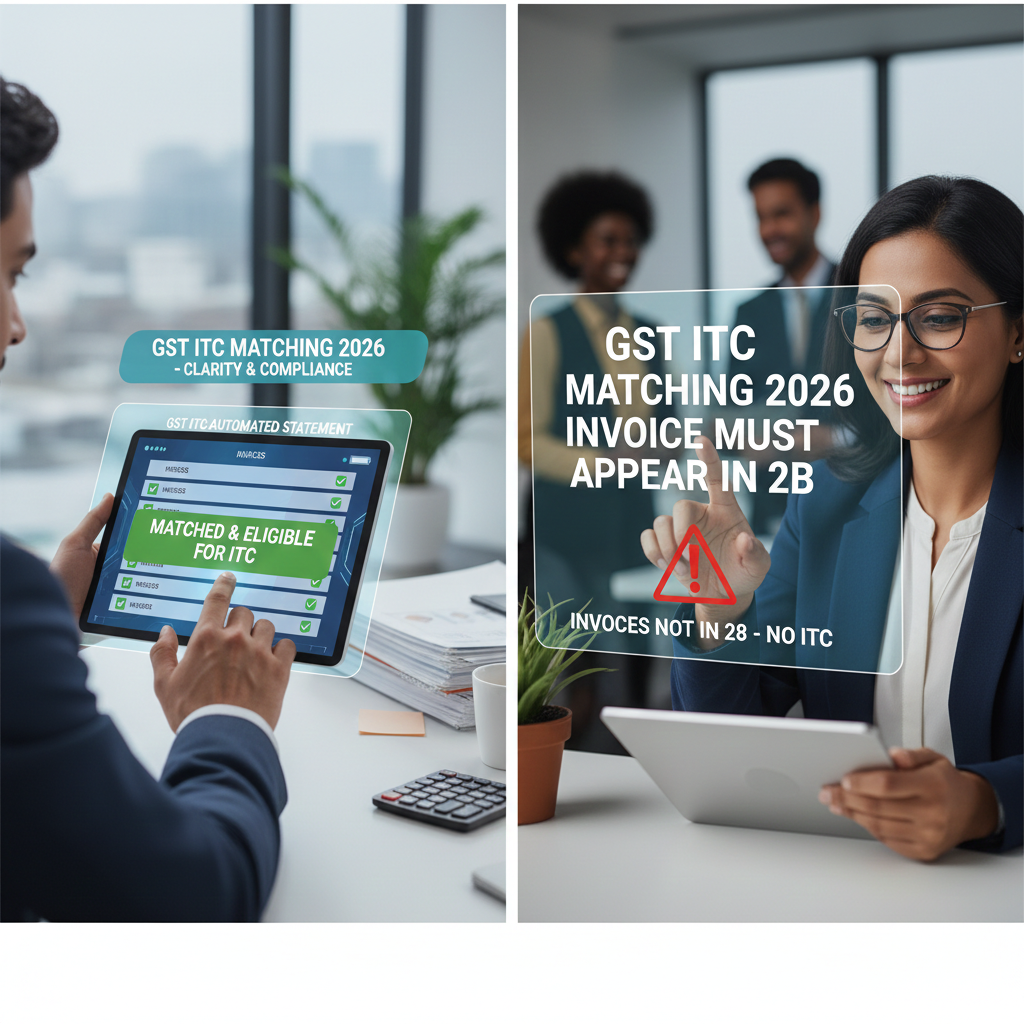
In 2026, the GSTR-2B statement has moved from being a helpful guide to becoming a “digital padlock.” The GST portal is now fully automated, and if an invoice does not appear in your 2B, the system simply will not allow the credit. The days of “provisional credit” are officially history. As we move through 2026, […]
GST Composition Scheme 2025-26: Turnover Limits & New Rules
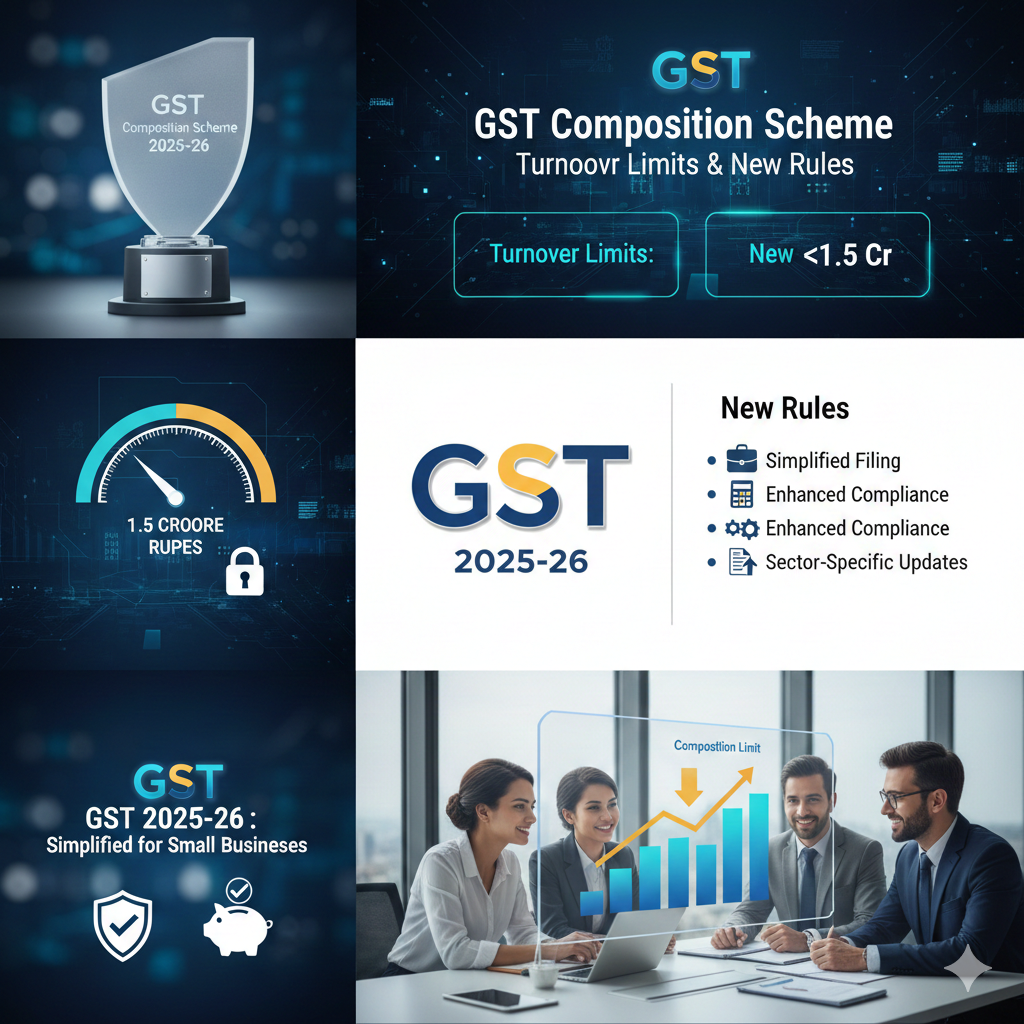
The GST Composition Scheme is designed for small taxpayers to escape the complexities of the regular GST regime. Instead of maintaining detailed records and filing monthly returns, eligible businesses pay a fixed, lower rate of tax on their total turnover. For the Financial Year 2025-26, the GST Composition Scheme remains a vital tool for small […]