
GST on Inter-State vs Intra-State Supply – Case Analysis
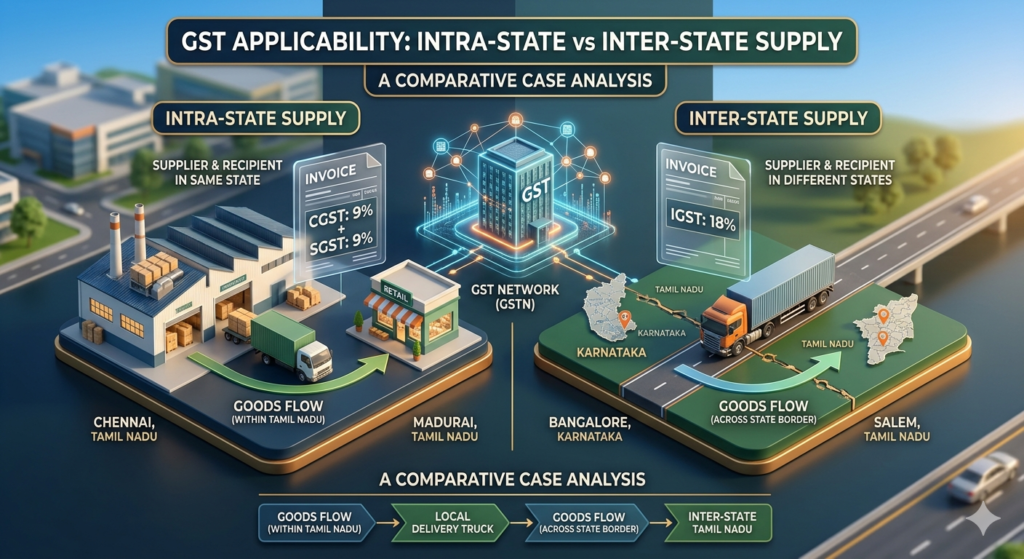
Under the Goods and Services Tax (GST) system in India, the classification of a transaction as inter-state supply or intra-state supply determines the type of tax that must be charged. Understanding this distinction is essential for businesses because it affects tax liability, invoicing, compliance, and input tax credit. This article explains the difference between inter-state […]
New Business GST Checklist – 2026 Starter Guide
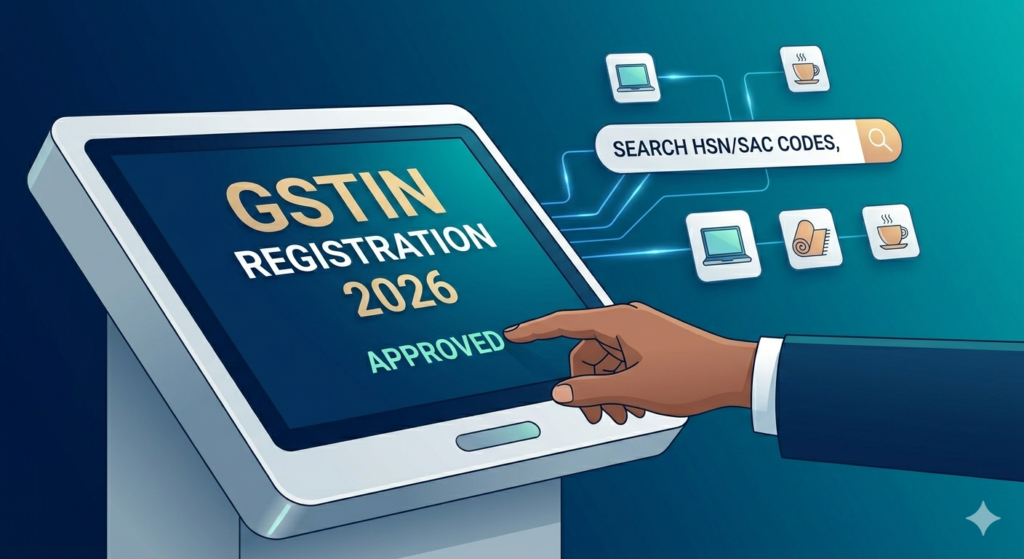
Starting a new business in India requires proper tax compliance from day one. One of the most important registrations for businesses dealing in goods or services is Goods and Services Tax (GST). Proper GST registration and compliance help avoid penalties, ensure smooth business operations, and build credibility with customers and suppliers. This starter guide provides […]
SWITCHING FROM REGULAR TO COMPOSITION OR QRMP – PROCEDURE AND IMPACT
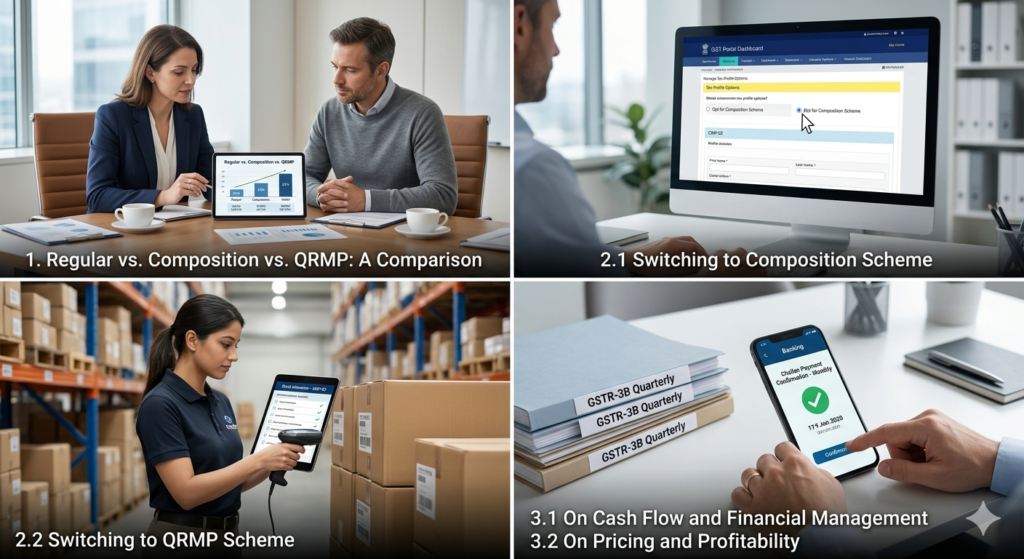
Under the GST system, taxpayers are given different compliance schemes based on the nature and turnover of their business. Businesses registered under GST can operate under the Regular Scheme, Composition Scheme, or QRMP Scheme. Depending on their turnover and compliance convenience, taxpayers may decide to switch from the Regular Scheme to either the Composition Scheme […]
GST in Manufacturing Sector – 2026 Challenges and HSN-Based Taxation

The manufacturing sector plays a crucial role in the growth of the Indian economy. With the introduction of the Goods and Services Tax (GST), the taxation structure for manufacturers has become more uniform and transparent. However, as the system continues to evolve, manufacturers in 2026 face several challenges related to compliance, classification of goods, and […]
Composition Dealer Restrictions under GST – Practical Risks Every Business Must Know (2026 Guide)
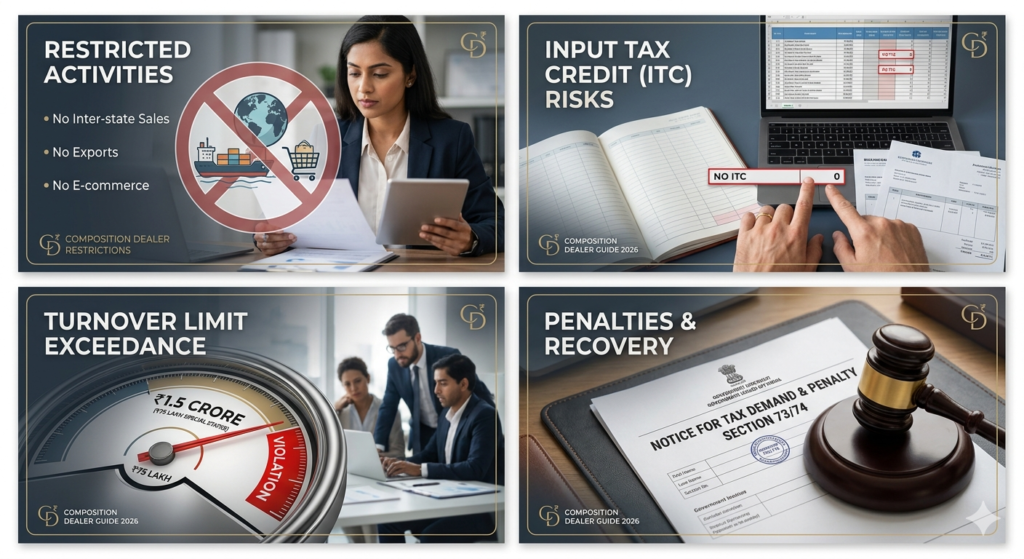
The Composition Scheme under Goods and Services Tax (GST) was introduced to reduce compliance burden for small taxpayers. While it offers simplified returns and lower tax rates, it comes with strict restrictions. Many businesses enter the scheme without fully understanding the practical risks involved. No Inter-State Sales Allowed Restriction: A composition dealer cannot make inter-state […]
LUT vs Payment of IGST for Exports in 2026 – Which Is Better?
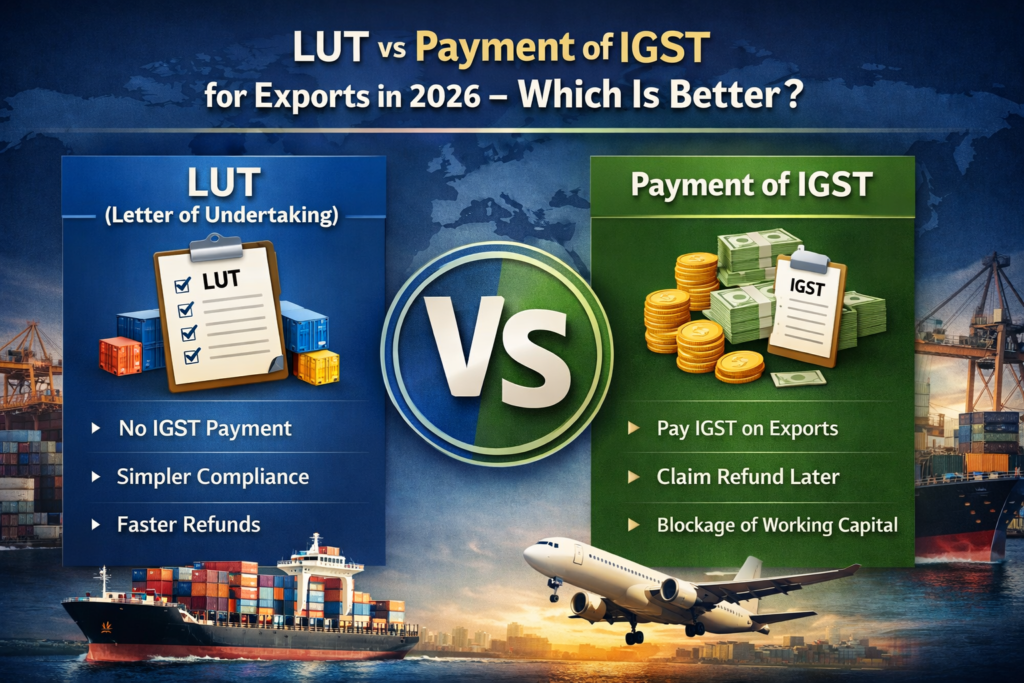
In 2026, exporters under Goods and Services Tax (GST) continue to have two options for zero-rated supplies (exports): Export under LUT (Letter of Undertaking) without payment of IGST Export on payment of IGST and claim refund later Choosing the right method depends on your cash flow position, compliance capacity, and refund experience. What is LUT? […]
Wrong ITC Claimed – How to Correct Without Penalty (2026 Guide)
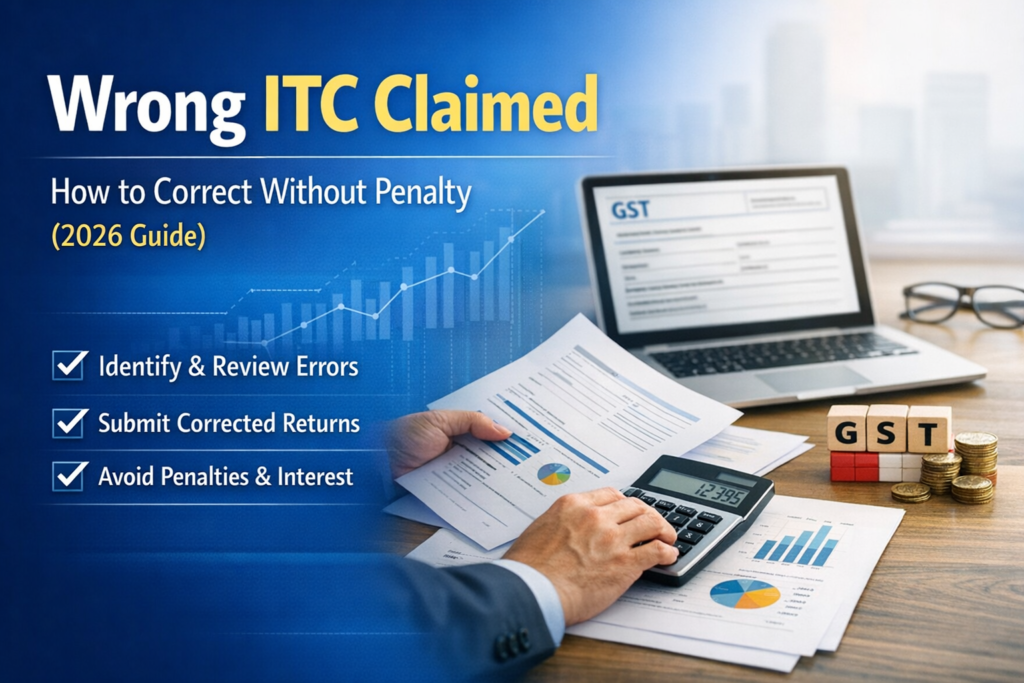
Claiming Input Tax Credit (ITC) correctly under the Goods and Services Tax is crucial for every registered taxpayer. However, mistakes can happen — excess ITC claimed, ineligible credit availed, duplicate claims, or ITC taken without supplier compliance. If corrected properly and voluntarily, penalties can often be avoided. Common ITC Mistakes in 2026 Before correcting, identify […]
Common GSTR-3B Mistakes in 2026 and How to Avoid GST Notices
Filing GSTR-3B correctly is one of the most critical compliance responsibilities under the Goods and Services Tax (GST) regime. In 2026, with increased system validations, AI-based risk analysis, and tighter scrutiny, even small errors can trigger automated notices. This article explains the most common GSTR-3B mistakes in 2026 and practical steps to avoid departmental notices. […]
GST on E-Commerce Operators – New Guidelines (2026)
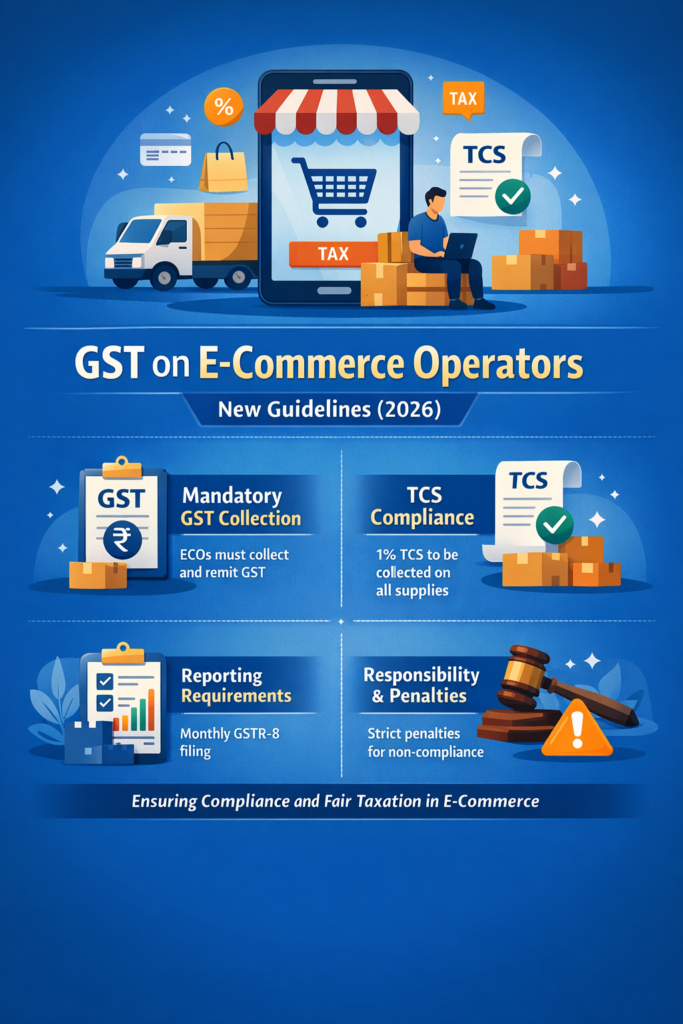
Goods and Services Tax (GST) has brought many changes to how businesses collect taxes in India. In recent updates for 2026, new guidelines for GST on e-commerce operators have been introduced to make compliance easier and clearer for online marketplaces, sellers, and service providers. These changes affect major aspects like registration, tax liability, reporting, and […]
MSME Udyog to Udyam Registration 2026 – Eligibility, Documents & Benefits Complete Guide

In India, MSME registration has been simplified through the introduction of Udyam Registration. Earlier, businesses were registered under Udyog Aadhaar, but now it has been replaced by Udyam Registration as per the guidelines of the Ministry of Micro, Small and Medium Enterprises. If you are running a small business and still have Udyog Aadhaar, this […]